Skip to content
-
Subscribe to our newsletter & never miss our best posts. Subscribe Now!
markdave.site

My WordPress Blog

markdave.site

My WordPress Blog

  • homepage
  • blog
  • news
  • profile
  • autobiography
  • gallery
    • photobiograhy
    • family
    • friends
    • lovers
  • favorites
    • My Favorite Video
    • My Favorite Audio
  • contact
  • homepage
  • blog
  • news
  • profile
  • autobiography
  • gallery
    • photobiograhy
    • family
    • friends
    • lovers
  • favorites
    • My Favorite Video
    • My Favorite Audio
  • contact
Close

Search

  • https://www.facebook.com/
  • https://twitter.com/
  • https://t.me/
  • https://www.instagram.com/
  • https://youtube.com/
  • https://www.facebook.com/
  • https://twitter.com/
  • https://t.me/
  • https://www.instagram.com/
  • https://youtube.com/
Subscribe
news

Researchers in China Have Identified the Smallest Cat Ever Found That Lived 300,000 Years Ago

By dave mark
June 29, 2026 2 Min Read
0

A tiny jaw fragment recovered from a cave in southern China’s Anhui Province has led paleontologists to identify an entirely new species of wild cat, one that ranks as the smallest member of the family Felidae ever documented in the fossil record. The find comes from Hualongdong Cave, a site already well-known for its archaic human remains, and pushes back what scientists know about the diversity of small cats in prehistoric Asia.

The new species, named Prionailurus kurteni and described in the journal Annales Zoologici Fennici, dates to roughly 300,000 years ago, during the late Middle Pleistocene. Uranium-series dating of the fossil hominin layers where the specimen was found places it between 275,000 and 331,000 years old. The cat lived alongside an archaic human population at the site, as well as giant pandas, tigers, leopards, clouded leopards, and brown bears, making Hualongdong one of the most carnivore-rich fossil localities known from that period in East Asia.

The entire specimen consists of a small mandibular fragment with two teeth preserved: a fourth premolar and a first molar. Despite its size, the piece carries enough distinct features for researchers at the Institute of Vertebrate Paleontology and Paleoanthropology at the Chinese Academy of Sciences, together with collaborators from the Swedish Museum of Natural History, to establish it as a previously unknown species.

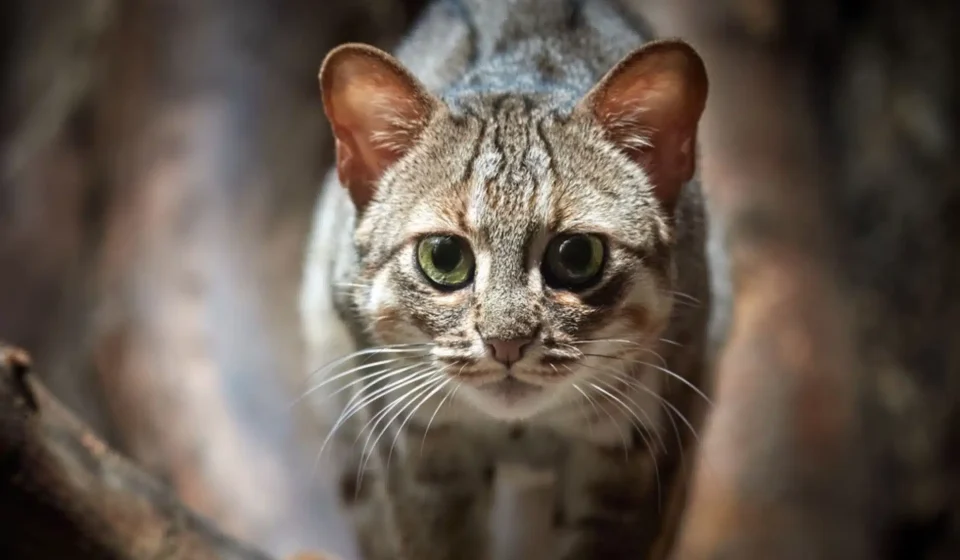
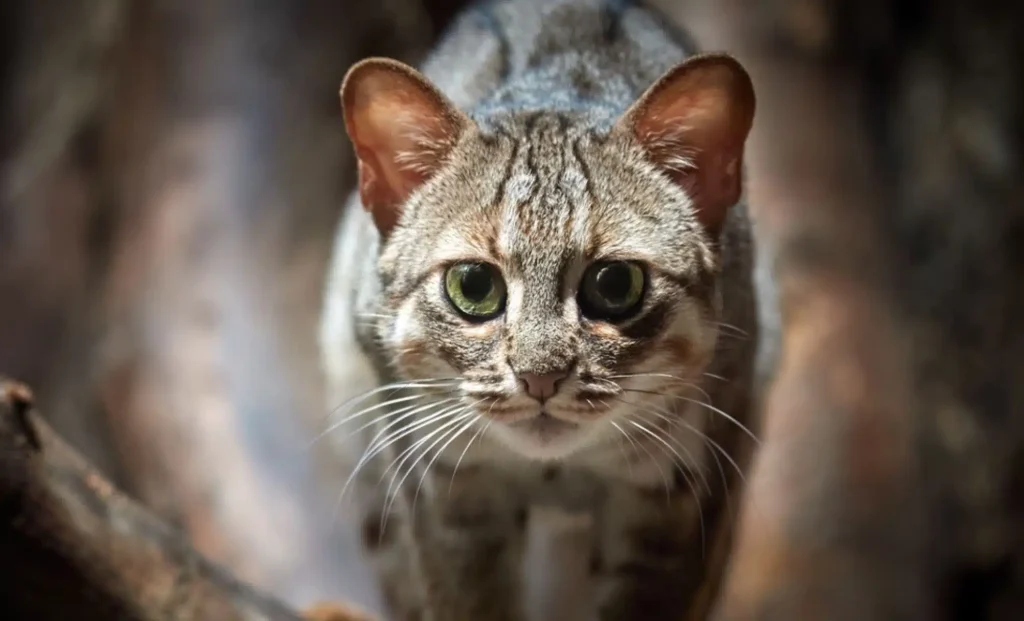
At its largest dimension, the first molar measures just 6.37 millimeters in length. That places P. kurteni in the same size range as the two smallest living cats on Earth: the rusty-spotted cat (Prionailurus rubiginosus) of South Asia and the black-footed cat (Felis nigripes) of southern Africa.

Tags:

A Single Jaw Fragment
Author

dave mark

Follow Me
Other Articles
Previous

What Determines a Maine Coon’s Coloring?

Next

our gradation in grade 12

No Comment! Be the first one.

Leave a Reply Cancel reply

Your email address will not be published. Required fields are marked *

Recemt Articles

  • welcome
  • Catch Real Cats: A Fun Adventure for Cat Lovers
  • Healthy Treats for Persian Cats
  • The Wonderful World of Cats
  • A Mother’s Love: The Caring Mother Cat

Recent comments

  • A WordPress Commenter on Hello world!

Sponsors


Copyright 2026 — markdave.site. All rights reserved. Blogsy WordPress Theme

Powered by
►
Necessary cookies enable essential site features like secure log-ins and consent preference adjustments. They do not store personal data.
None
►
Functional cookies support features like content sharing on social media, collecting feedback, and enabling third-party tools.
None
►
Analytical cookies track visitor interactions, providing insights on metrics like visitor count, bounce rate, and traffic sources.
None
►
Advertisement cookies deliver personalized ads based on your previous visits and analyze the effectiveness of ad campaigns.
None
►
Unclassified cookies are cookies that we are in the process of classifying, together with the providers of individual cookies.
None
Powered by